Uncensored AI is gaining momentum for a reason. People are increasingly living within frames: work, rules, ready-made images from the feed. Imagination exists, but there are few outlets. You don’t want someone else’s video from search — you want your own frame, alive, without cut scenes and without “this is not allowed.”
This is where 18+ neural networks come in. Not theory, but practice in Telegram: in a couple of minutes online they animate photos, remove clothes from images, or assemble short videos based on your own scene. Below are three working directions with examples from Erofy 18+, ErofyLab, and SwapixAI. Not a review for ratings, but an analysis of what exactly happens to the frame.
What is 18+ AI
18+ AI refers to neural networks that process adult visuals without template scene cutting. Not “chat about the weather,” but work with photos and short videos: movement, clothing, background, lighting, angle.
In practice, these are three different actions with the same source.
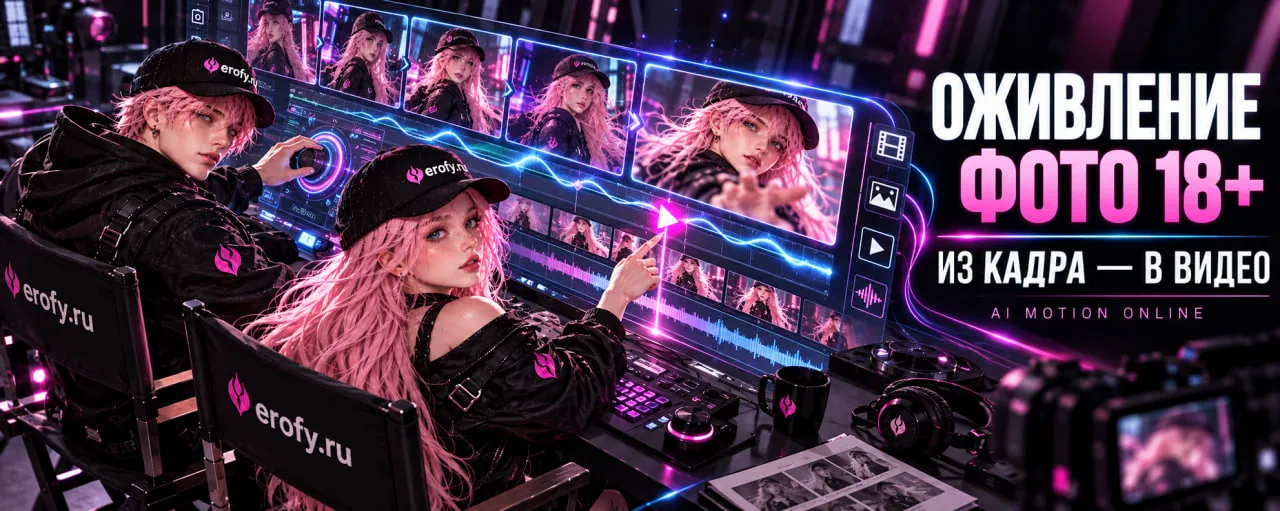
Animating 18+ photos. A static image becomes a short clip. A gaze, breathing, facial expressions, and head turns appear. The face usually remains the same. This is not a new character from scratch, but the same frame in motion.
Scene assembly. The frame is first rewritten with text: different clothing, different background, different lighting, different angle. Video is then made from this new version. This is how ErofyLab works.
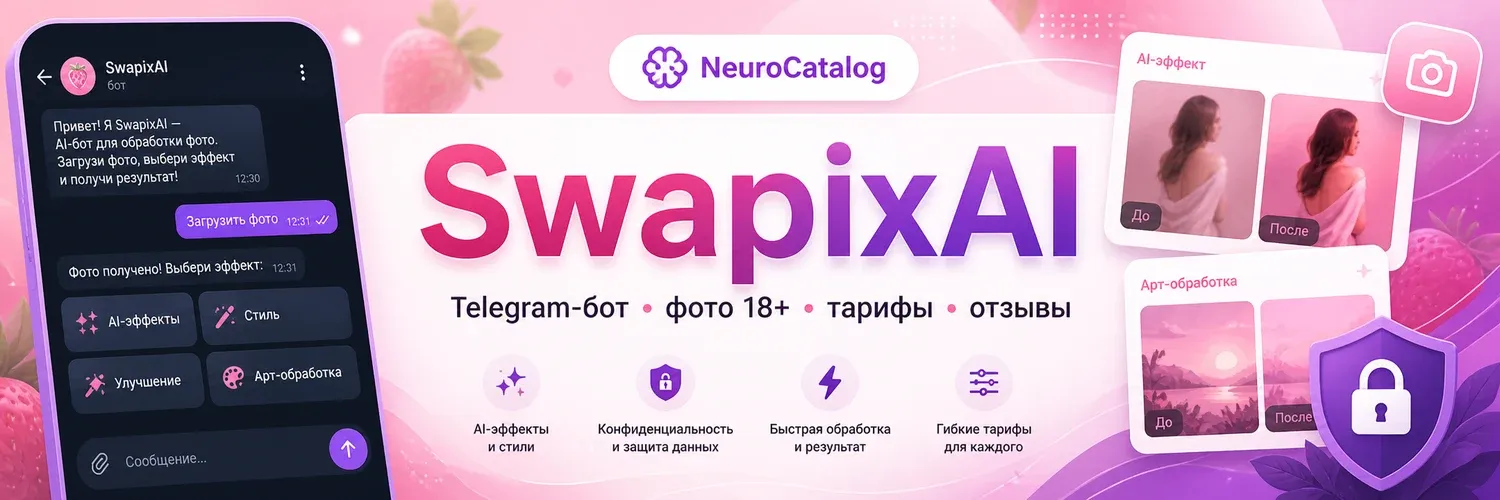
Undressing by photo. Clothes are removed directly from the image. The picture remains a picture — there is no video. This is how SwapixAI works.
What they have in common: 18+ input, work in Telegram, reliance on the original photo. The difference is in the result. If you expected a video but clicked the undresser — you get a static frame. If you expected a nude but clicked animation — you get movement on the clothes that were already in the frame.
This is not a film set or an editing suite. A short clip, frame editing, a few minutes of waiting. Not a movie and not an endless clip.
Why is there such interest in this AI
Control around us is too tight. Feeds cut frames. Sites block scenes. Ready-made content is someone else’s: not your face, not your scene, not your fantasy.
Your own photo closes this gap. Instead of searching for “something similar,” you take a specific photo and get a version from it that wasn’t in your gallery. Hence the search queries: animate 18+ photo, video from photo, undress by photo, uncensored neural network.
The second reason is speed. No studio, no editing, no learning a program. A chat in a messenger, upload a frame, result in minutes.
The third is the feeling that there is no filter between the request and the image. Adult material here is not cut with one “not allowed” button. An age gate remains: services immediately set 18+.
Interest is growing not because “magical cinema appeared.” It grows because fantasy no longer has to be adjusted to someone else’s video from search results.
Example for animating 18+ photos
Erofy 18+ takes a ready frame and animates it. The scheme is short: open the bot, confirm age, send a photo, get a clip.
The neural network does not apply the same head shake to all images. It reads the pose, lighting, and angle of this particular photo and builds movement from them. The output is a few seconds of a living frame, not a five-minute change.
If the source is already wrong — the clothes are wrong, the background is wrong, the angle is wrong — animation alone won’t fix it. In that case, the frame is first rewritten.
ErofyLab is designed for exactly that. You write what to change. The bot edits the image and then creates a video from the new scene. The face from the source is usually preserved. The prompt here is not poetry. “Make it hotter” says almost nothing. “Different background, different lighting, different clothes, different angle” — that’s a real task.
The combination is simple. If you only need movement — use animation. If you need a different scene and then a video — use Lab.
Example for undressing by photo
SwapixAI does not enable animation. It changes the image itself: upload a photo — get a version without clothes.
The trial result often comes with blurring. This is not a bug; it is how the first run is usually structured. Further processing is done inside the bot.
Undressing and animating are not the same action. First you can bring the frame to the desired look, then animate that file. If you want to describe clothes, background, and angle in words and immediately get a video — this is textual scene assembly, not an undresser.
The model reconstructs the body based on the clothing. If the source does not clearly show lighting or figure, the reconstruction will be equally blurry.
How to achieve the best result
A neural network sees pixels, not the fantasy in your head. The cleaner the source, the smoother the output.
Use a sharp frame. Soft focus and heavy retouching break both animation and undressing.
Lighting should be simple and clear — not a dark corridor or a harsh direct flash.
The face or figure should not be a dot in the corner. A narrow crop and a cut-off shoulder are harder for the model to read.
For Lab, write the scene to the point: what to change in clothing, background, lighting, angle, and what movement is needed in the video. The more vague the text, the more randomness in the frame.
Don’t expect full body physics from a short clip. It’s a few seconds, not a full shoot. If the result is blurry — it’s almost always the source or a too-general request, not “the neural network is permanently broken.”
Limits, pricing, and blur on the trial are visible inside the service. They change, so there’s no point inventing numbers for the article.
Moral block: only personal or humor
Any such processing is about your own frame. A personal archive, a joke between adults, a scene that no one asked to post in the feed.
This is not a tool to “check out a classmate,” not a way to get revenge, and not content for someone else’s page. The person in the photo did not give consent for their image to have a second life. Humor only works where everyone is in on it and everyone is an adult. Without that, the joke quickly stops being a joke.
The services themselves set a simple rule: your own material or material for which you have consent. It’s better not to bypass this rule.
What happens if you post someone else’s photo without permission
Publishing is no longer “just playing in chat.” It is someone else’s image in the public domain, often with a sexual context the person did not choose.
Consequences vary depending on the country and platform, but the set is the same.
A claim from the person in the photo. A demand to remove it. A complaint to the messenger, social network, or hosting.
Account blocking. Platforms cut such content quickly, especially if it features a real person.
Legal review. Processing and publishing images of people without consent is explicitly prohibited in many countries. If sexual context is added to the frame, the conversation becomes more serious: honor, dignity, privacy, and in some cases — specific rules on intimate images and deepfakes.
Money doesn’t save you here. “It’s just a neural network” does not cancel the fact that a specific person is in the photo. Deleting a post after it has been reposted is already too late: copies take on a life of their own.
In short: processed your own — your zone. Posted someone else’s without asking — someone else’s life, someone else’s lawsuit, someone else’s complaint.
How they make money on such AI: referrals
Some bots in the ecosystem have a referral program. The idea is simple: you share your link, a new person joins through it, and the service awards a bonus. More often this is not “a salary from the neural network,” but additional generations, credits, or internal balance.
In practice, people earn not from the photo itself, but from traffic. A channel, post, note, or search — a person clicks the link, launches the bot, and uses it. The link owner receives credit according to the rules of the specific program.
Important limitation. Check the referral conditions inside the bot or project channel. Percentages, link lifetime, what exactly the bonus is for — all of this changes. There’s no point inventing numbers: today one thing, tomorrow another.
The second point is the offer. A referral does not make someone else’s photo legal. If you drive traffic to “undress anyone,” this is no longer earning from a tool, but working with other people’s faces. A normal scheme is narrow: your own content, your own scenario review, your own link, your own earnings from clicks.
18+ AI does not promise a new life and does not promise passive income from every frame. It gives an outlet for fantasy on your own photo: undress an image, rewrite a scene, or animate a frame in a couple of minutes online. After that — either a personal archive or consent. Without this, it’s better not to open the tool.