
What is Google Gemini
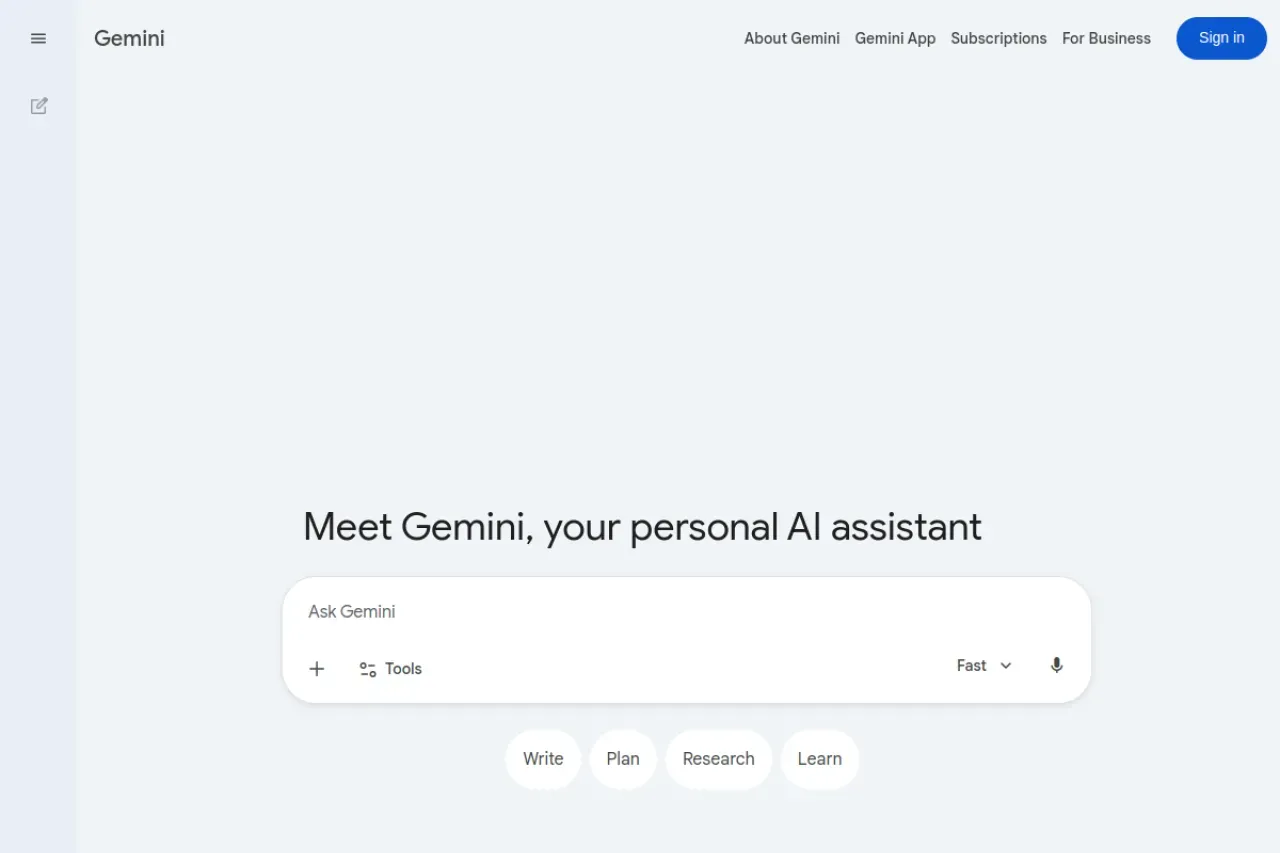
Google Gemini is the tech giant’s most advanced AI system, built from the ground up as a native multimodal model. It can seamlessly process and generate text, images, audio, video, and code. Launched as the successor to Google Bard, it now powers the Gemini app and is available across Google products.
Core Features
Native multimodality — understands images, videos, audio files, and documents
Advanced coding capabilities across multiple programming languages
Real-time web access through Google Search
Integration with Gmail, Docs, Sheets, Slides, and YouTube
Image generation powered by Imagen 3
Context window up to 2 million tokens in Gemini 1.5 Pro
Real-World Use Cases
Professionals use Gemini for research, data analysis, content creation, code debugging, meeting summarization, presentation building, language learning, and creative brainstorming. Students benefit from its ability to explain complex topics, while developers leverage it for rapid prototyping and code review.
Pricing and Access
The standard Gemini model is free. Gemini Advanced (1.5 Pro) requires a Google One AI Premium subscription (~$20/month). Developers can access the Gemini API via Google AI Studio and Vertex AI for enterprise solutions.
Pros and Cons
Pros: Up-to-date knowledge, excellent performance in STEM tasks, deep Google ecosystem integration, strong multimodal understanding, fast responses.
Cons: Occasionally overly cautious with content filters, sometimes less creative than competitors in storytelling, limited features in the free tier.
Overall, Google Gemini stands as one of the most powerful and practical AI assistants available in 2025, especially for users already working within Google Workspace.