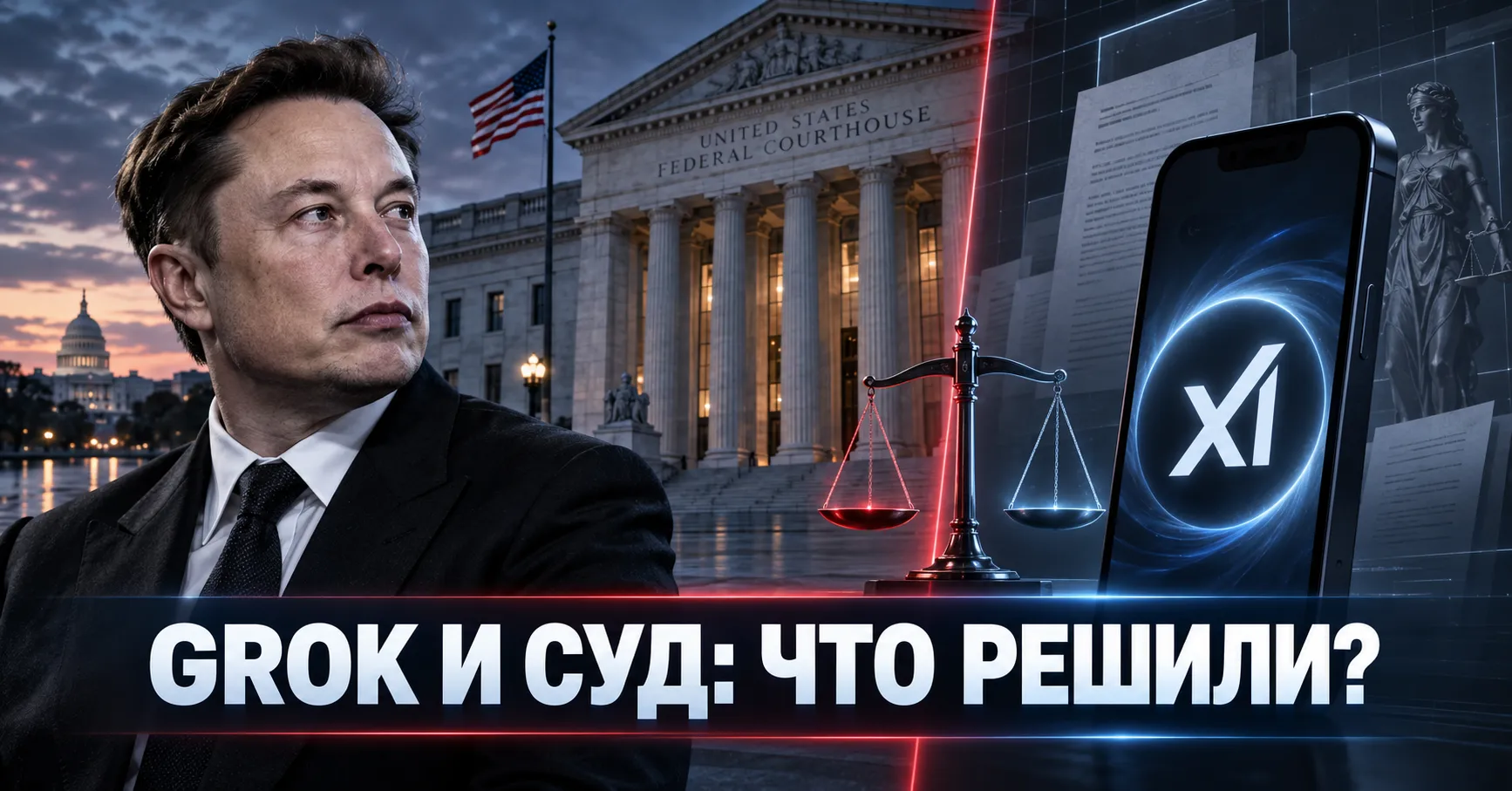
On social media, the US court ruling was quickly reduced to a provocative claim: Elon Musk supposedly “won the right to undress people in Grok.” The headline attracts clicks, but it distorts the case. The appeals court did not legalize intimate deepfakes or cancel xAI’s own rules. It temporarily stopped Minnesota from enforcing its law while the company’s appeal is considered.
The story matters beyond Grok Imagine. The dispute may shape how US authorities regulate image generators, who is responsible for an output—the user or the AI platform—and where the line lies between protecting people and overrestricting technology.
What happened on October 2, 2026
The US Court of Appeals for the Eighth Circuit granted xAI temporary relief. During the appeal, Minnesota cannot enforce against the company a law barring platforms from providing tools that create realistic nude depictions of an identifiable person when those details were absent from the original image.
This is an interim ruling. The court has not decided whether the law is constitutional or resolved the case on its merits. Saying that “xAI won” is accurate only in a narrow procedural sense: the company secured a pause in enforcement during the appeal.
A month earlier, the district court took the opposite view. Judge Donovan Frank declined to block the law, saying xAI had sought emergency relief too late and had not shown imminent irreparable harm. The appellate court has now allowed the disputed rule to remain unenforced temporarily, but the central conflict is not over.
How Minnesota’s law worked
H.F. 1606 took effect on August 1, 2026. It targeted not only people who distribute intimate deepfakes, but also owners of websites, apps and software through which a user can create a realistic depiction of a specific person’s intimate body parts.
That design became the main point of dispute. Violations could carry serious consequences, including a civil penalty of up to $500,000 per incident. In response, xAI added geographic restrictions for Minnesota users in Grok Imagine’s image-editing system.
Supporters justified the strict approach by the harm caused by non-consensual sexualized deepfakes, which can be used for humiliation, harassment and blackmail and may also target minors. xAI does not dispute the need to fight abuse, but argues that the ban is too broad.
Why xAI is challenging the ban
The company’s main argument invokes the First Amendment and freedom of expression. According to xAI, the rule regulates a tool based on what appears in its output and could affect not only illegal material but also consensual, satirical, artistic or educational work.
xAI also points to an unusual allocation of responsibility. Minnesota’s law targets the owner of the AI platform even though the user writes the prompt. For generative services, that can mean blocking an entire class of actions in advance or facing a separate claim for each disputed output.
The state replies that ordinary moderation after publication is insufficient because the harm begins when a believable intimate image is created. The regulator therefore seeks to restrict not just distribution, but access to technology that can produce such content rapidly.
Will Grok restore photo editing?
The judicial pause removes one Minnesota-specific constraint, but it does not automatically restore every Grok Imagine feature. xAI decides which modes to enable, where they are available and which requests its safety systems must reject.
Even if geographic filters for Minnesota are relaxed, the service rules may remain unchanged. xAI has said Grok may not be used for illegal or harmful privacy violations, including sexualized images of real people without consent. The company has also reported account suspensions and measures against attempts to bypass safeguards.
The accurate conclusion is that the ruling may let xAI reconsider some regional limits introduced specifically because of H.F. 1606. It does not guarantee a switch that removes moderation, and it does not require xAI to permit prohibited uses.
Can users now “undress photos” in Grok?
No. The appellate ruling is not a personal permission slip. It temporarily limits enforcement of one law against xAI; it does not erase other federal or local laws, platform rules, image and privacy rights, consent requirements or liability for distributing intimate material.
Uploading a real person’s photo without their knowledge is especially risky. Beyond an account ban, it may lead to a complaint, removal of the content, a civil lawsuit or criminal consequences depending on the jurisdiction and circumstances.
For safer AI editing, use your own photos, images of consenting adults, or fully synthetic characters. Consent to an ordinary photograph is not consent to create or publish an intimate version.
What the ruling means for the AI market
xAI’s dispute with Minnesota highlights a problem many image generators will face. Developers want versatile editors; lawmakers want to prevent them from becoming factories for non-consensual deepfakes. Narrow filters are easy to evade, while broad ones can block lawful creative uses.
The case could have at least three consequences:
More precise moderation. Instead of disabling editing across a region, platforms may distinguish real photos from synthetic characters and account for evidence of consent.
New liability rules. Courts will have to decide how far a state may shift the risk of user behavior onto the owner of a general-purpose AI tool.
Different features by region. Until uniform rules exist, Grok and other AI editors may offer different modes depending on local law.
For users, a technical capability is not the same as legal permission. Before uploading sensitive material, consider the platform’s rules, file privacy and the consent of the person shown.
Why the viral headline is inaccurate
The claim that “Musk won the right to undress people” contains three substitutions. The ruling favors xAI, not Elon Musk personally. It grants temporary protection during an appeal, not a final declaration that the law is unconstitutional. And the dispute concerns a state’s power to regulate an AI platform—not an unconditional user right to create intimate images of anyone.
That does not make the news unimportant. The temporary block of a first-of-its-kind restriction shows how difficult it is to protect deepfake victims without banning an overly broad range of legitimate image-editing uses.
What happens next
The appeal will continue. The parties will argue about free expression, the limits of AI regulation and the risks of non-consensual intimate images. The court may keep the law blocked, allow Minnesota to enforce it, or send the dispute back for further proceedings.
Grok users should rely on the feature’s actual availability in their region and xAI’s current rules, not viral posts. If the editor rejects a request, the court news is not a reason to bypass its safeguards.
In brief
xAI secured a temporary pause of Minnesota’s law during the appeal.
The law has not been finally struck down, and the case continues.
The court did not authorize users to create intimate deepfakes.
The ruling may affect Grok Imagine’s regional limits, but xAI retains its own moderation.
Editing a real person’s photo requires clear consent and compliance with the law.
FAQ
Did Elon Musk fully win the Grok case?
No. xAI won an interim procedural step. Minnesota’s law is paused during the appeal, but there is no final ruling on its legality.
Did Grok remove its photo-editing restrictions?
The public court ruling does not confirm the automatic removal of all restrictions. xAI controls feature access based on region, service rules and safety systems.
Did the court allow intimate images of real people?
No. It temporarily limited enforcement of a specific law against xAI. Other laws, platform rules and liability for non-consensual images still apply.
What is Grok Imagine?
Grok Imagine is xAI’s set of generative tools for creating and editing images and video. Available modes and restrictions may differ by account and region.
Is it safe to upload someone else’s photo to an AI editor?
Not without that person’s clear consent, especially for intimate or sexualized editing. For experiments, use your own image or a fully fictional adult character.